
Should I Apply Protective Film on My Rolex? A Rolex Owner's Honest Take

Buying a Rolex is more than a purchase; it's an investment. Whether it's your first one or your fifth, the moment you have it on your wrist, one question tends to follow almost immediately: Should I put a protective film on it?
This debate has been going on for decades, and it doesn't seem to be going away anytime soon. Some collectors highly recommend it. Others are completely against it. As a Rolex owner myself, I've sat on both sides of this conversation, and in this post, I want to walk you through everything you need to know so you can make the right call for your watch.
What Is Watch Protective Film (PPF)?
Before we dive in, let's clear up one common point of confusion: the plastic sticker that comes on a brand-new Rolex from the factory is not what we're talking about here. That factory sticker is just temporary packaging protection; most people peel it off right away.
What we're referring to is PPF, or Paint Protection Film. A thin, transparent film that is professionally applied on top of your watch to shield it from scratches and everyday wear. Think of it the same way people protect a new car with a paint protection film: it's there to keep the surface looking pristine underneath.

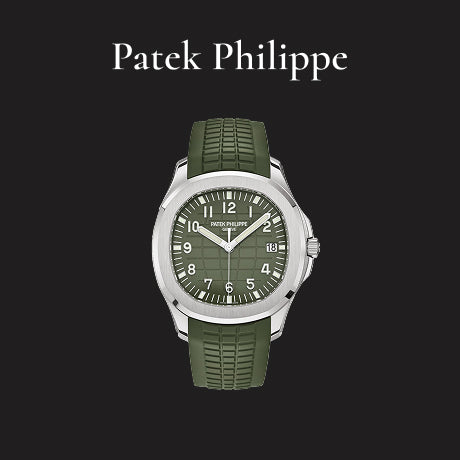
Protective film on a Petek Philippe Aquanaut 5968
Why Som![]() e People Love It and Why Others Don't
e People Love It and Why Others Don't
People have strong opinions on this topic, so let's look at both sides honestly.
Here’s Why They Do It
If you've ever owned a Rolex for more than a week, you already know how quickly scratches show up, especially on the clasp or the bracelet links. For many owners, applying PPF comes down to three main reasons:
1. Micro-scratch protection from day one. A new Rolex can pick up hairline scratches just from everyday tasks like typing, brushing against a table, or sliding on a jacket. PPF creates a barrier between the metal and the world.
2. Protecting resale value. The pre-owned Rolex market is strong, and condition matters enormously. A well-preserved watch, especially a high-demand model like the Daytona or Day-Date, can retain significantly more value when it is in good condition.
3. Peace of mind to actually wear it. This one matters more than people realize. Many Rolex owners admit they become anxious wearing their watch to certain events or activities. A good PPF wrap gives you the freedom to wear your watch freely. Whether you're at the gym, at the beach, or simply going about your day, you can wear it without constantly worrying about every bump and scratch.
The Case Against Watch Film
On the other side, there are owners and collectors who feel that a Rolex should accumulate wear marks over time. To them, scratches are a record of the watch's life, proof that it was actually worn and enjoyed, not just locked in a safe.
There's also an aesthetic concern that comes up often: a film, even a very thin one, can slightly affect the clarity of the crystal and reduce the natural metallic reflection of the watch. For those who appreciate the way light plays on a perfectly polished or brushed surface, even a subtle change can feel like a compromise.
Both perspectives are completely understandable. A luxury timepiece means different things to different people, and there's no universally right answer here.
 The clasp, case side, and case back of a Rolex with protective film on
Not All Films Are Created Equal
Here's where things get important: if you decide to go with protective film, the quality of the film makes all the difference.
There is a wide range of Rolex protective films on the market, and the quality varies significantly. A poor-quality film can actually cause more harm than good; it can leave residue, peel unevenly, trap dirt, or create a bumpy, uneven surface that ruins the look of your watch. This is not the result you want on a timepiece that may be worth thousands of dollars.
At Tiger River Watches, we use a professional-grade film kit engineered specifically for watch applications. Our film is made with 6-layer ultra-thin TPU material, which offers a key advantage: self-healing properties. Minor surface scratches on the film itself gradually disappear on their own, keeping the film looking fresh over time.
Our film is also designed to withstand real-world conditions, including swimming in pools or the ocean, high temperatures, salt exposure, and extended daily wear.
Why Model-Specific Fit Matters
One detail that many people overlook is that the film must be cut and sized for your exact Rolex model. This isn't something you want to improvise with generic film sheets.
Here's why: if a piece of film is even slightly too small, it leaves part of the case unprotected and exposed to scratches. If it's slightly too large, the excess film folds or lifts at the edges, collecting dust and creating an unclean, unsightly look. A proper fit means the film lies flat, invisible, and secure across every surface of your specific reference.
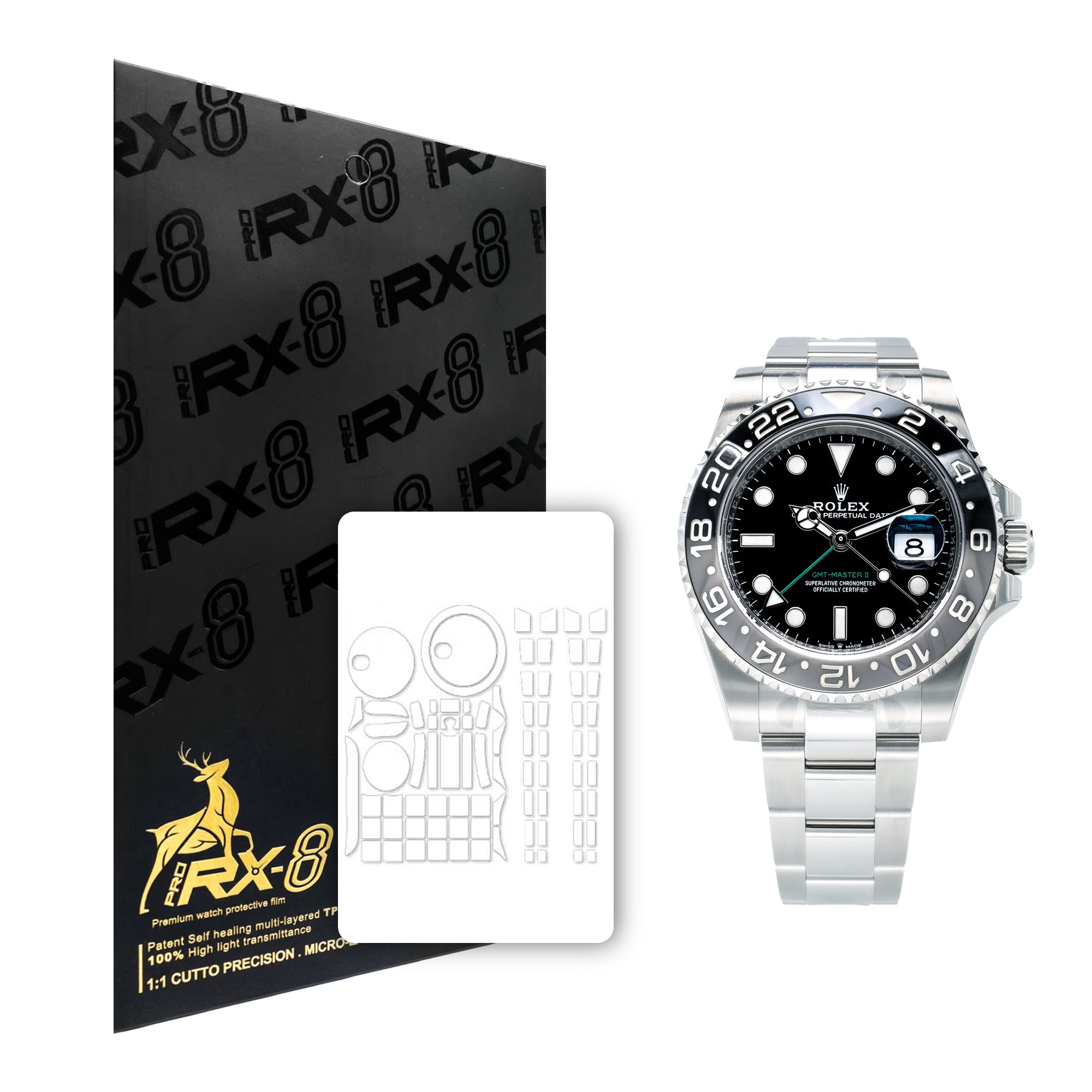
At Tiger River Watches, we carry protective film kits tailored to individual Rolex models. They are precision-cut, so every piece fits perfectly.
What Parts of the Watch Are Covered?
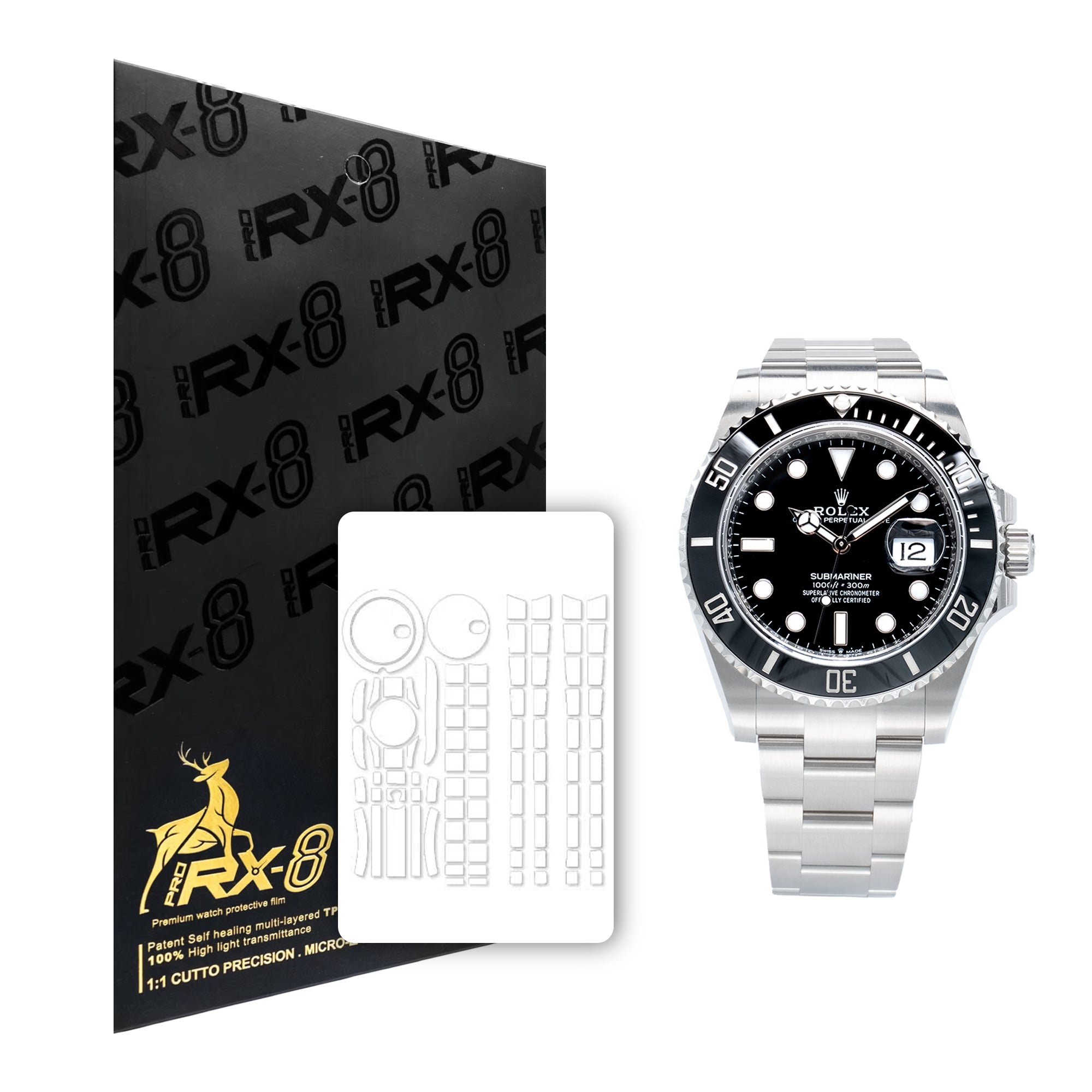
A complete watch film wrap should cover all the vulnerable surfaces of the watch. Our kits include coverage for:
-
- Crystal (the watch face)
-
- Bezel
-
- Case sides
-
- Case back
-
- Lugs
-
- Bracelet links
-
- Clasp
We always recommend asking about coverage details before purchasing any film kit or booking a service, as different products cover different areas.

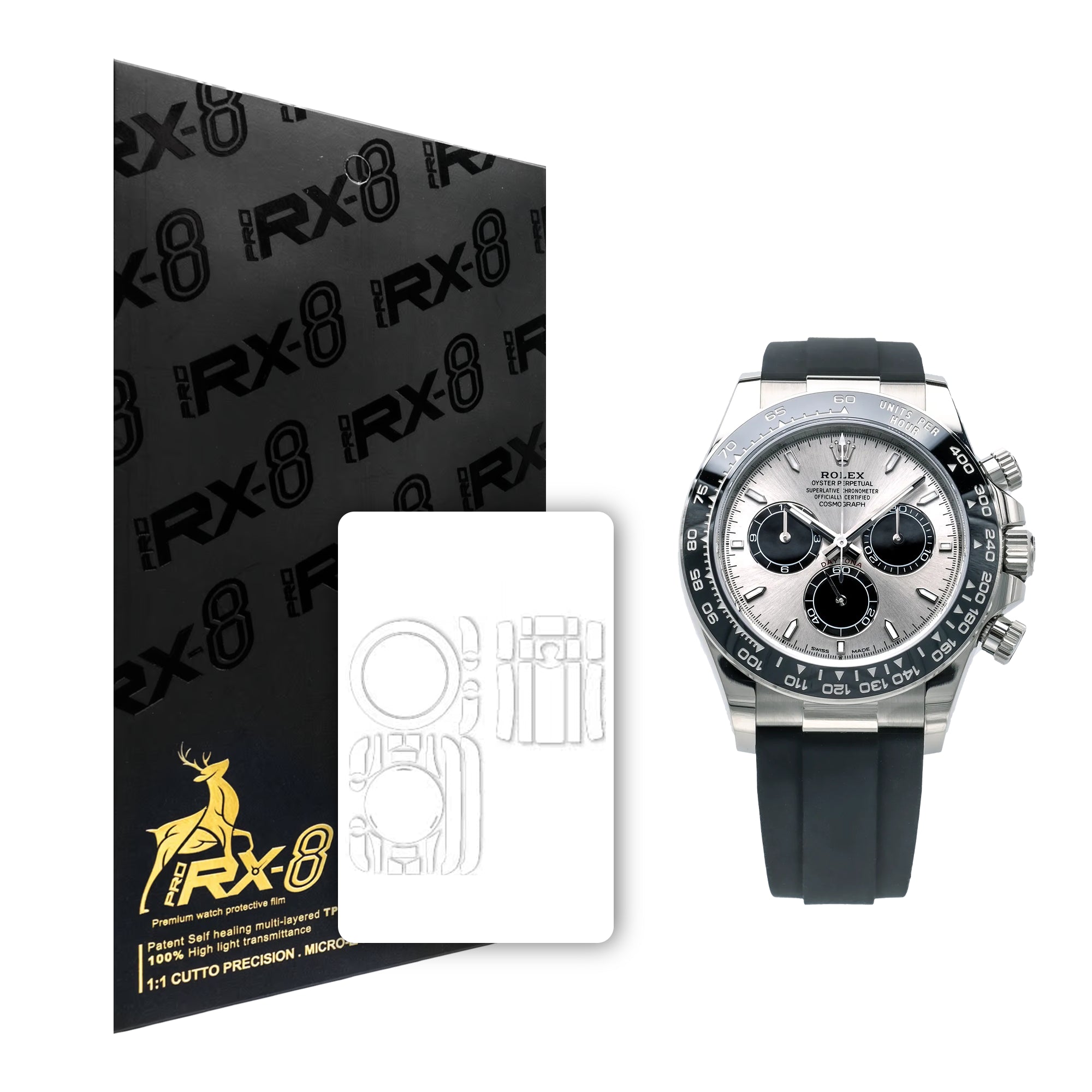
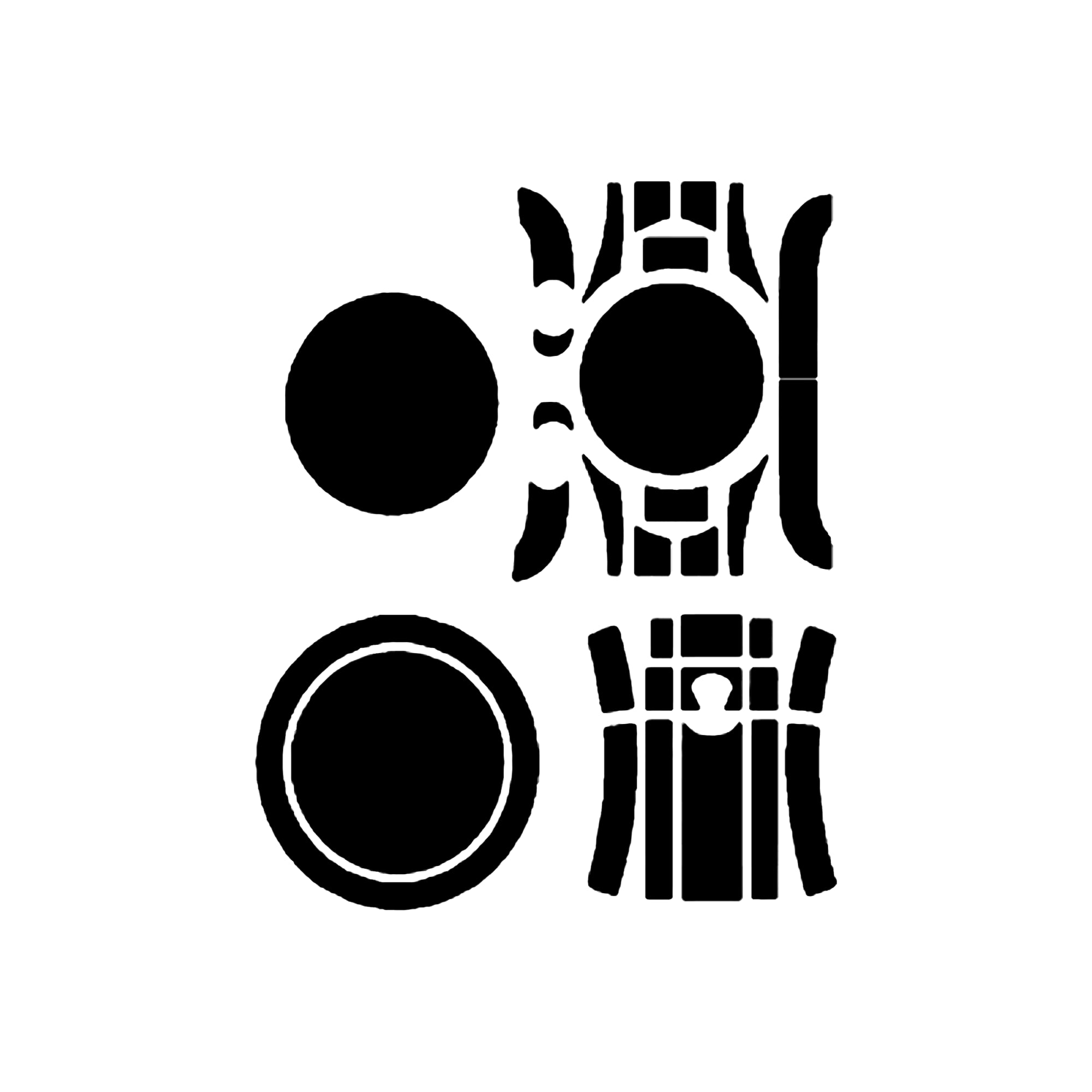
A diagram showing all the parts of a Rolex that are covered by our protective film wrap
DIY vs. Professional Installation: What You Should Know
Some of our clients purchase the film kit and attempt to apply it themselves, and they quickly discover that it's harder than it looks. The most common issues we see from DIY attempts include:
-
- Air bubbles trapped beneath the film
-
- Dust particles caught underneath, creating small bumps
-
- Misalignment on the curved surfaces of the case, especially around the lugs and bezel
These issues aren't just cosmetic annoyances; they can actually cause the film to lift at the edges, reducing its protective effectiveness and the overall appearance of the watch.
A quality film wrap requires two things: a premium film and skilled hands to apply it. The craftsmanship behind the installation is just as important as the material itself. If you're considering DIY, just know that the learning curve is real, and the stakes are high when it's a Rolex.

Protective film on a Rolex Submariner after two years
Frequently Asked Questions
1. Does protective film affect how the watch looks or feels?
When applied correctly with a high-quality film, most people genuinely cannot tell it's there. The most common feedback we hear from our customers is that they completely forget the film is on until they have to look closely. The visual impact, if any, is minimal when the job is done right.
2. Which Rolex models benefit most from protective film?
Any Rolex benefits from protection, but it makes the most practical sense for watches with high resale value or strong collector demand. References like the Daytona, Day-Date, GMT-Master II, and other high-demand models tend to hold value exceptionally well.
3. Will removing the film scratch the watch?
A film that meets proper quality standards, like ours, will come off cleanly without leaving any residue or causing any surface damage to the watch underneath. No adhesive marks, no scratches. This is one of the key things to look for when choosing a film product.
The Final Verdict: Should You Do It?
Here's my honest take as a Rolex owner:
If you appreciate the natural sign of wear and love the way the metal looks with its original reflective surface, just leave it as it is. There's nothing wrong with letting your Rolex develop character over time. That's part of the experience.
But if you value condition, resale potential, and the freedom to wear your watch without anxiety, a properly done film wrap is absolutely worth it.
And here's an important comparison to keep in mind: the alternative to scratches isn't just film, it's often polishing. Many Rolex owners eventually send their watch in for a polish when the scratches get too noticeable. But polishing physically removes metal from the surface. Over time, it subtly changes the geometry of the case. For collectors who care deeply about originality, a polished watch is often considered less desirable than one with natural wear. In that context, protective film is actually the gentler long-term option.
Ready to Protect Your Rolex?
If you're considering a protective film wrap for your Rolex, we'd love to help. Contact us with your Rolex model, and we'll walk you through the right film kit and installation options for your specific watch.
Your watch deserves to be worn. Let's make sure it stays looking its best while you do.




Comments
Gibt es Dienstleister, die diese Folie professionell aufkleben? Mit freundlichen Grüßen